My Leadership Journey
For more than 10 years, I sent a weekly email to my teams, and recently I used AI to analyse nearly 400 of those emails (redacted and anonymised, of course) to understand how my leadership style had changed over time.
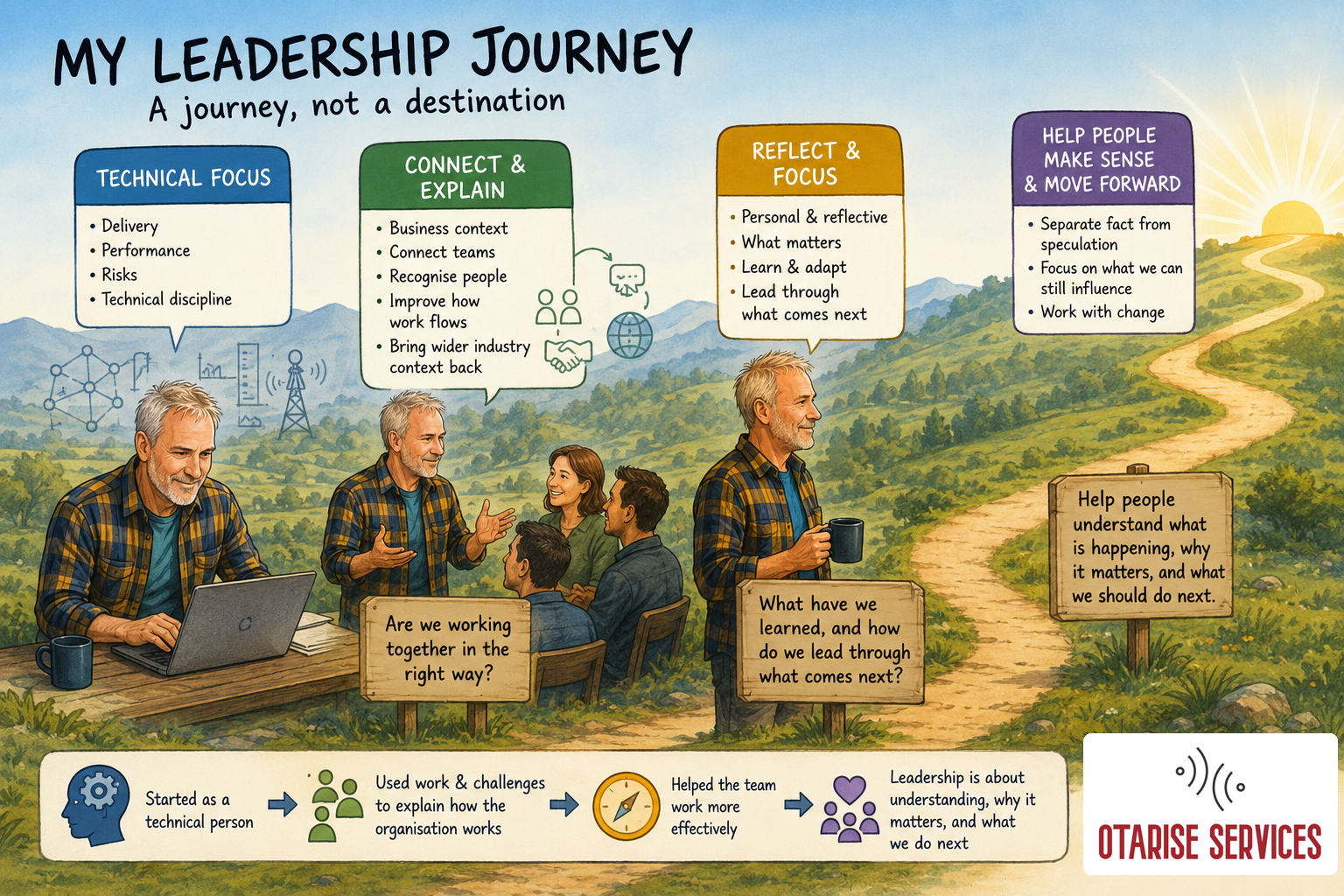
In the early years, my emails were mostly about updating the team on technical delivery.
Design reviews. Supplier issues. Network performance. Customer problems. Operational risks.
The underlying message was: what work are we doing, and how are we doing it?
At that stage, leadership was largely about technical discipline.
Over time, the emails became more focused on explaining business context, connecting teams, recognising people’s contributions, and improving how work moved through the organisation.
They also became a way to bring wider industry context back into the team, particularly around emergency communications, regulation, changes in the mobile industry, vendor capability, and cross-operator collaboration.
The message became: are we working together in the right way?
In the later years, the emails became more personal and reflective. I was more likely to begin with a personal or family story and use it to make a point about work.
The message shifted again: are we focused on the things that matter?
And then: what have we learned, and how do we lead through what comes next?
One thing the emails showed me was that my approach to organisational change was not based on assuming that the details were already understood.
It was more often about helping people separate fact from speculation, understand what change meant for their work, and focus on what we could still influence.
Over time, I became less focused on explaining a new organisational structure and more focused on how we could work effectively within it.
The AI analysis confirmed that I started as a technical person trying to explain technical work clearly.
Over time, I began using the work we were doing and the challenges we were facing to explain how the organisation worked, and how we could work with it more effectively.
Looking back, the AI analysis didn’t just show me how my writing changed.
It showed how my beliefs changed.
I started out trying to explain the work.
Over time, I found myself helping people understand the organisation, work better together, navigate change, and make sense of uncertainty.
For me, that is what leadership gradually became.