Remote Working Plan
I regularly work remotely more than an hour from the nearest small town.
Most days I don’t give that much thought.
But occasionally it makes me wonder.
If I suddenly suffered a medical emergency during a video meeting, what could the people on the other end actually do?
They would know my name.
They might know I was somewhere near Wellington.
But would anyone know my exact location?
Would they know which road to send an ambulance to?
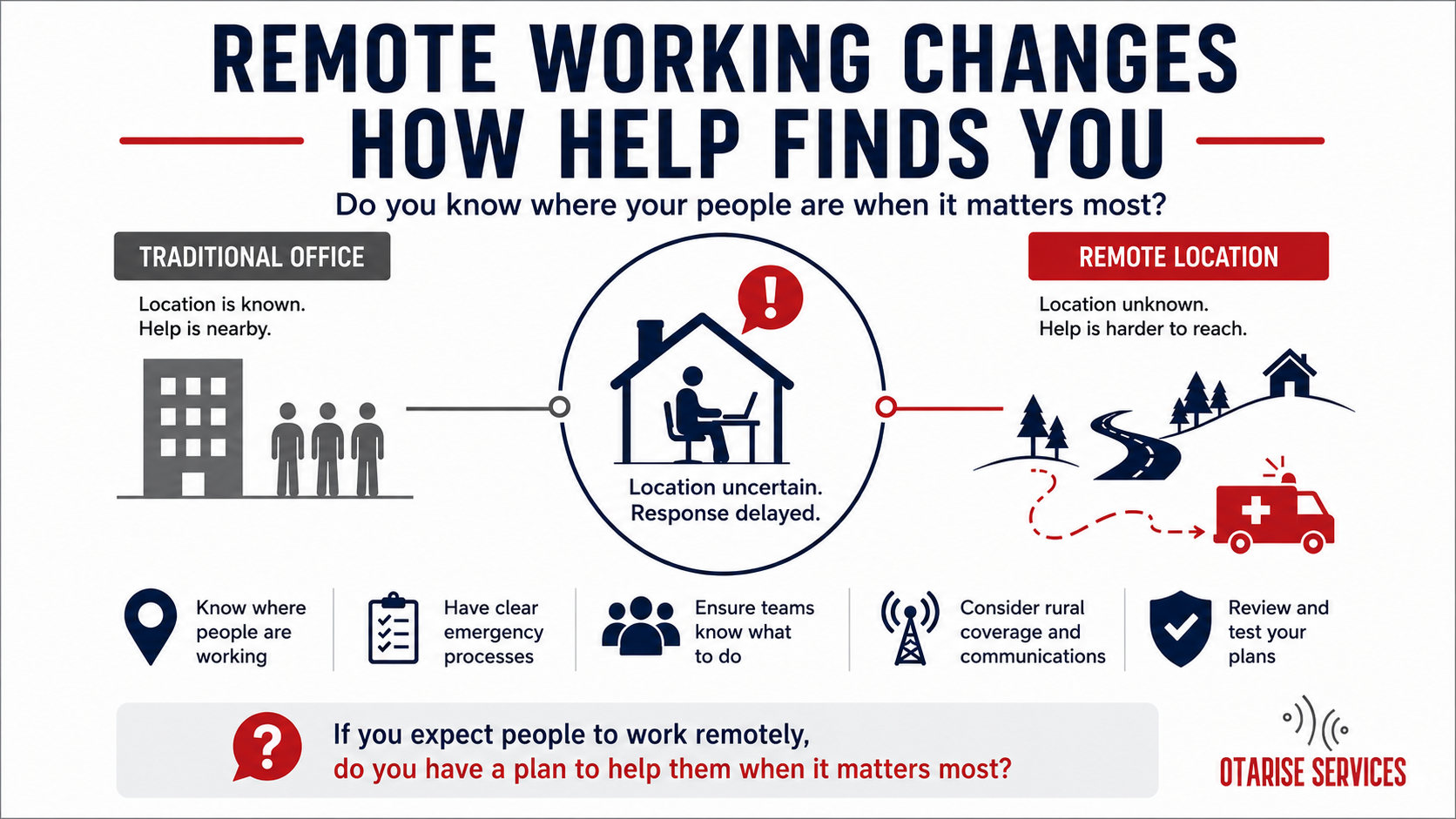
In a traditional office, those questions rarely arise. If someone collapses, colleagues are nearby and emergency services have a clear destination.
Remote working changes that.
It changes where emergencies happen, how they are recognised and, sometimes, how difficult it is to get help to the right place.
It is often discussed in terms of productivity, flexibility and employee choice.
Perhaps it also raises a less comfortable question about corporate responsibility.
If an organisation allows or expects people to work remotely, should it know where they are working from and have practical processes to respond if something goes wrong?
Many organisations have updated their technology and workplace policies for remote work.
I wonder how many have updated their emergency planning as well.