D2D Usage Provides Coverage Planning Analysis
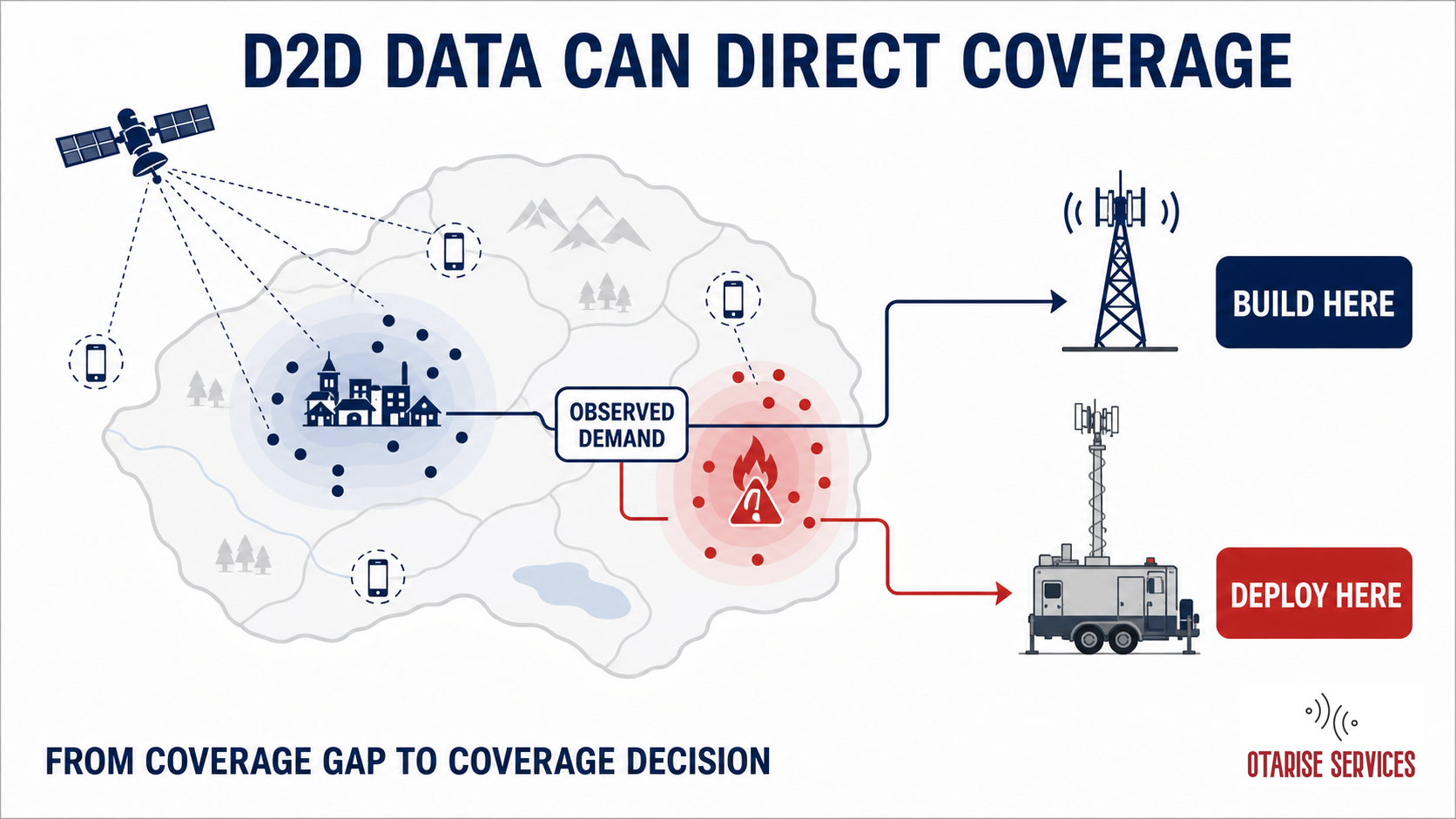
What if the most valuable output from D2D satellite is not the message itself, but evidence of where satellite connectivity was needed?
Mobile operators use coverage models, population data and complaints to identify coverage gaps. I think D2D adds another source: observed demand beyond the terrestrial network.
Aggregated and anonymised session volumes, repeat use, time of day and service type could reveal where customers are trying to connect when terrestrial coverage is unavailable.
Over time, sustained D2D use around a community, highway, worksite or tourism destination could strengthen the case for a new terrestrial site. Sparse, occasional use may confirm that satellite remains the more economical long-term layer.
But there is also a public-safety opportunity.
A sudden concentration of D2D activity could indicate a terrestrial outage or developing emergency in an area without coverage. Combined with incident information and network alarms, near-real-time analytics from the satellite provider could help an MNO and public-safety authority decide where temporary coverage may be needed.
A Cell on Wheels (COW), portable base station or other deployable could provide the additional capacity, indoor reach, priority and operational communications that D2D alone may not deliver.
Satellite data would need to be aggregated, privacy protected and validated against operational information. A spike in usage should support a decision, not automatically trigger deployment.
Agreements with the satellite partner would also need to provide timely, sufficiently granular data with clear security, retention and access controls. Public-safety access would require defined legal authority and governance.
D2D may therefore do more than fill coverage gaps. It could reveal where permanent coverage should be built and, during an incident, help direct temporary coverage to where it is needed most.
Do you agree, disagree or want to add another perspective? Comment below or message me directly.
#DirectToDevice #PublicSafetyCommunications #NetworkPlanning #SatelliteConnectivity #Telecommunications