The real heros of oganisational change
One thing I think gets overlooked during a corporate restructure is the role of the middle manager or team leader.
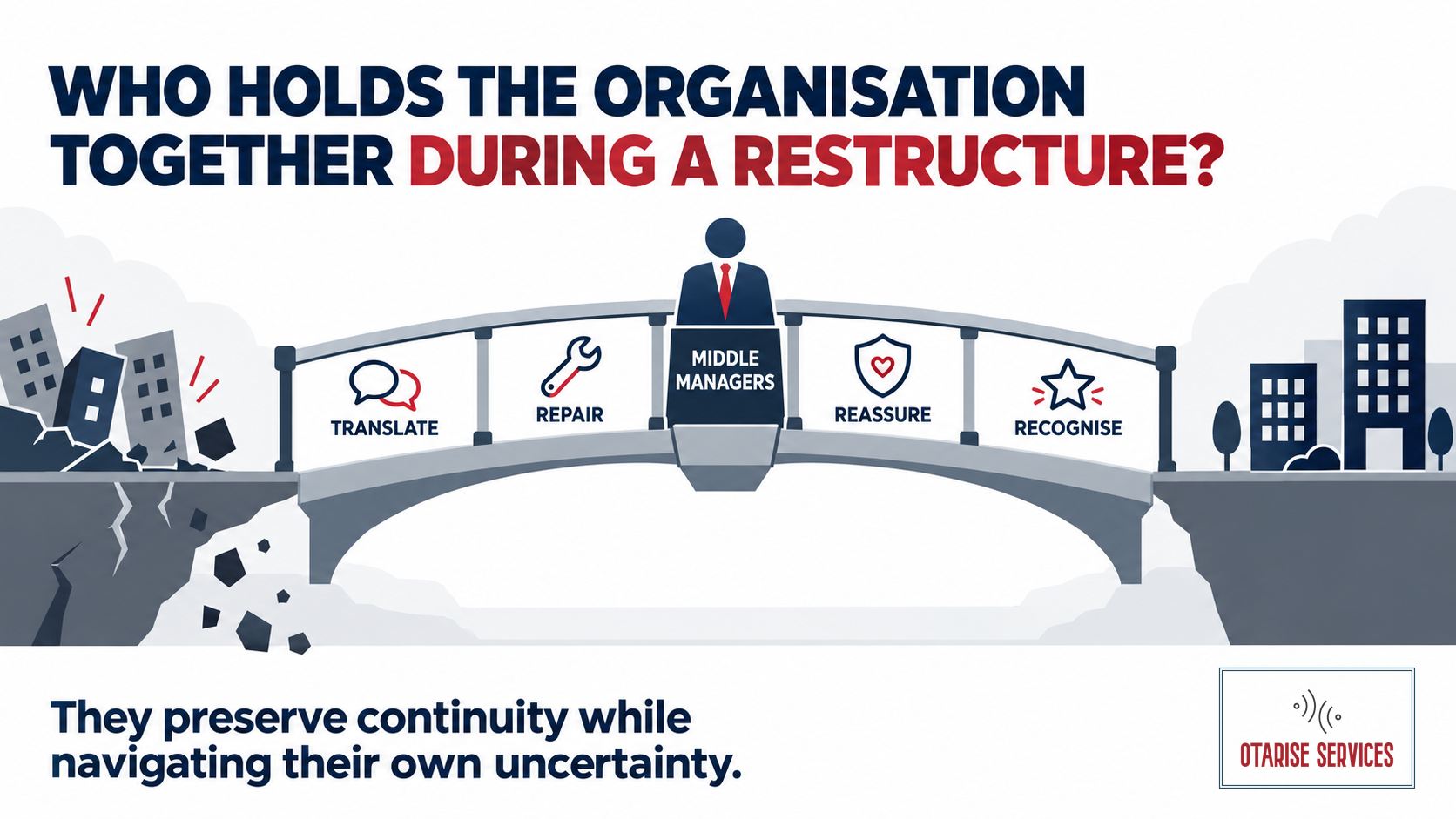
These are the people expected to help others navigate uncertainty while facing exactly the same uncertainty themselves.
They may not know whether their own role will survive, yet they still need to explain the change, answer questions and keep people focused. At the same time, they may be questioning the necessity, scope, drivers and timing of a change that sometimes feels as though it began only days after the last one finished.
They become translators of the new corporate vocabulary. Terms such as operating model, product owner, tribe, chapter or centre of excellence need to be converted into something practical: Who makes the decision? Who owns the outcome? Where do I go for help?
They also become process fixers.
New organisation charts rarely arrive with every responsibility, hand-off and system change resolved. Middle managers and team leaders find the gaps, reconnect people and develop workarounds so customers and projects do not suffer while the new structure settles.
They become emotional anchors too. They listen to concerns, contain rumours and look out for people who may be struggling, often without having complete answers or feeling particularly secure themselves.
Perhaps most importantly, they continue to recognise and celebrate the work that still gets done.
Networks keep operating. Customers still need support. Incidents are resolved and projects continue to deliver. That work can easily disappear beneath the noise of the restructure and the celebration from above about how successful the new way of working will be.
Middle managers and team leaders do much more than implement a new organisation chart. They translate, repair, reassure, connect and preserve continuity, frequently while wondering whether they will have a place in the organisation they are helping to create.