Information Sharing Framework is required
The relationship between emergency services organisations and mobile network operators is changing.
Historically, an emergency service was often treated as another enterprise customer, similar to a bank or utility. The operator might provide SIM cards, handsets, a service desk and account management, or integrate a vehicle-tracking or Wi-Fi solution.
That model made sense when mobile services were useful additions. It becomes less comfortable as mobile connectivity becomes a critical operational dependency.
The response I increasingly see is a demand for tighter service levels, stronger guarantees, financial penalties and greater operational influence.
These all have a place. But an SLA does not guarantee that a service will remain available. A penalty provides a remedy after failure, and the supplier will usually price the risk of that remedy into the service.
I think public safety needs something more operational: reliable visibility and responsive engagement.
That means real-time information about service status, emerging threats, planned outages, incidents, restoration activity and expected restoration times. It also means knowing that this information can be trusted when decisions need to be made.
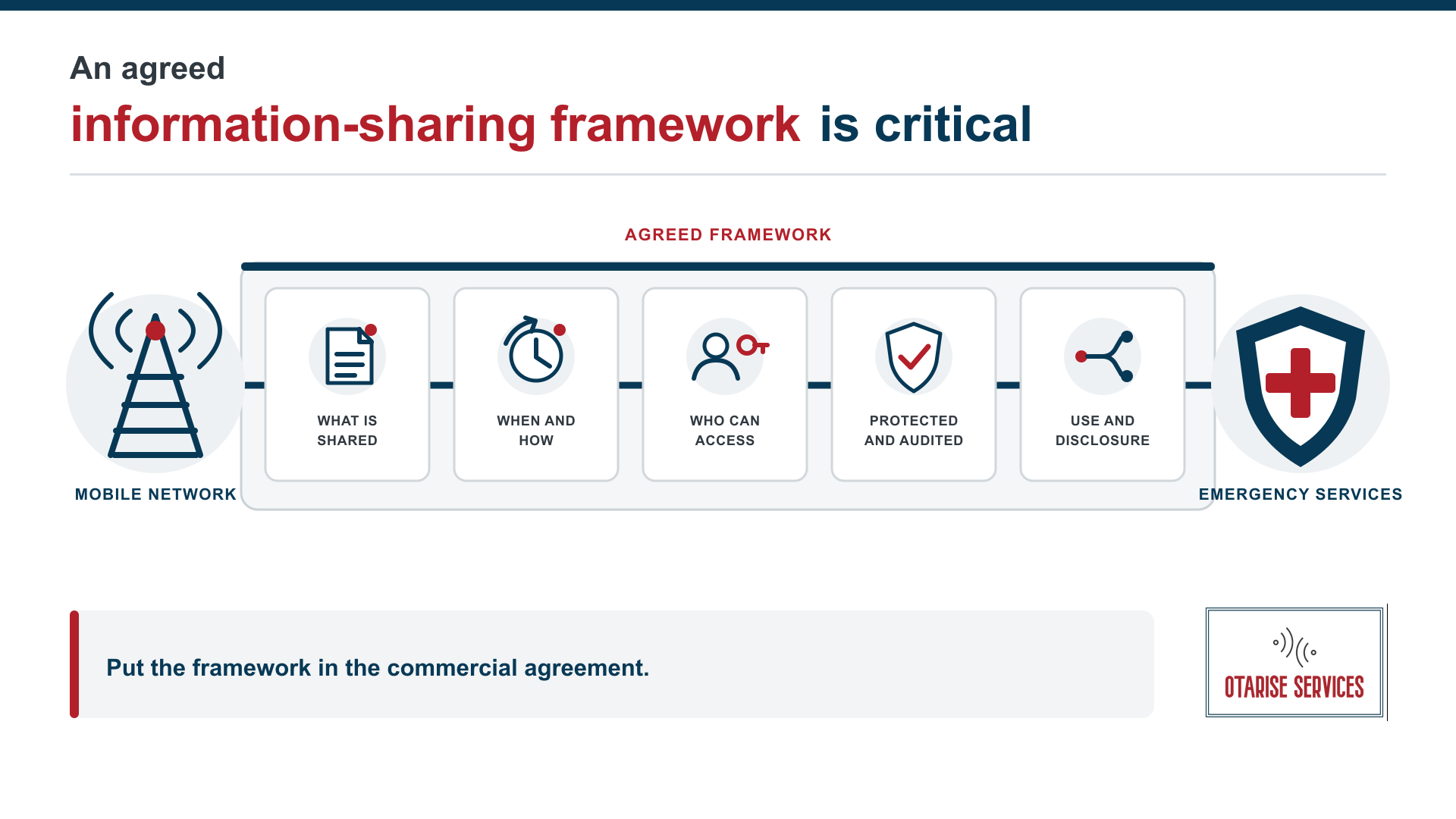
If visibility matters, it cannot depend on goodwill or personal relationships. It needs an agreed information-sharing framework defining:
what information must be shared
when and how it will be provided
who can access it
how it will be protected and audited
how it may be used or disclosed
Such a framework would not override existing legal, regulatory or commercial obligations. Nor should it give public safety organisations unrestricted access to an operator’s network or commercially sensitive information.
Its purpose should be to make the sharing of necessary operational information normal, governed and dependable.
Establishing this information-sharing framework should be part of the commercial agreement, not left to be developed during solution design. Its obligations should be as clearly defined, measurable and enforceable as the service levels themselves.