Cellular Backhaul Resiliency
Great to see the NZ Government allocating $6.4 million toward battery resilience improvements across rural cell sites. That’s a genuinely positive step and will absolutely help during shorter-duration power outages.
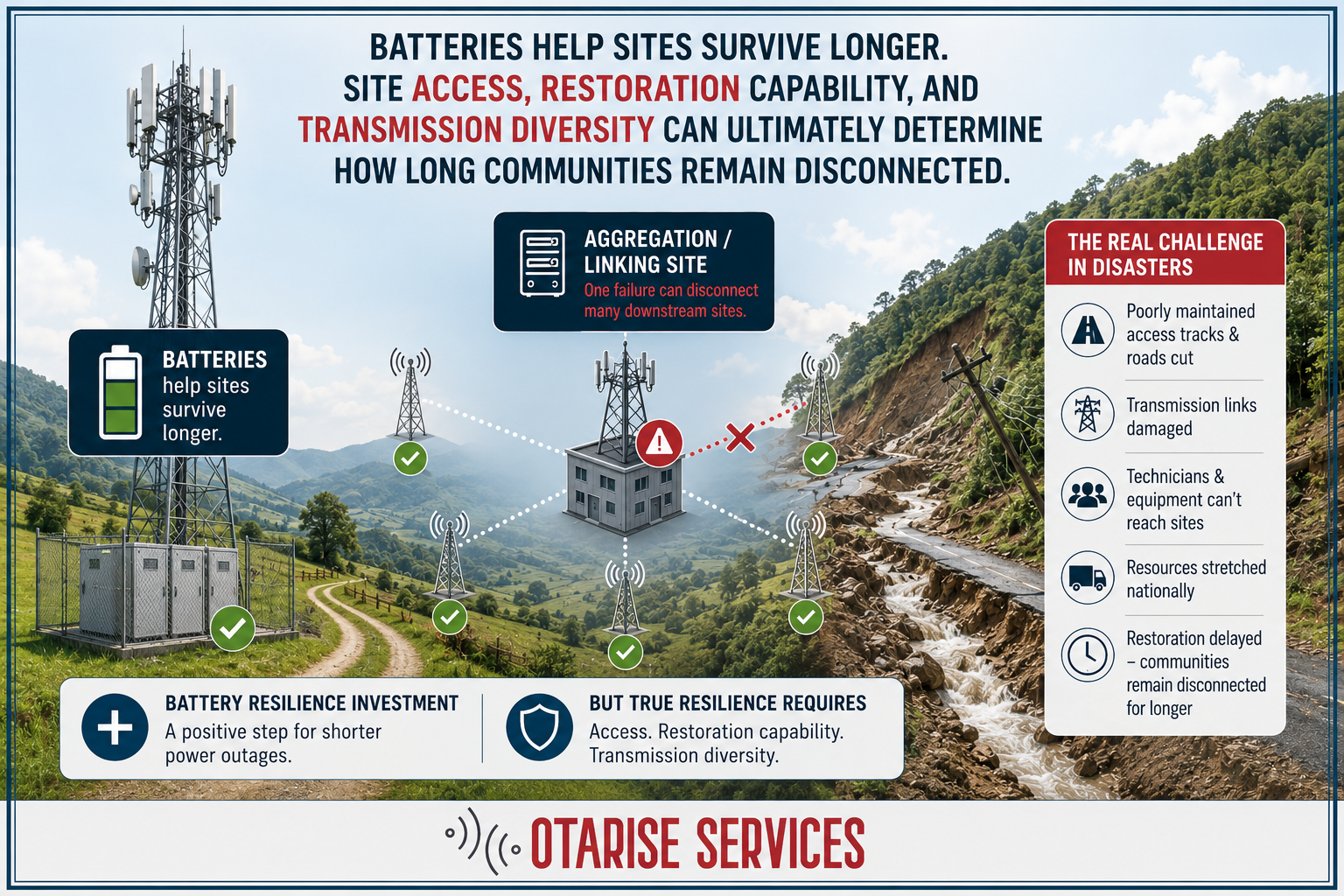
However, many resilience programmes globally still focus heavily on tower batteries while underestimating how fragile transmission and backhaul aggregation can be during floods, slips, fires, and wider power failures.
The serious issue during disasters is often not the initial outage but the inability to restore services quickly because access tracks are poorly maintained, roads are cut, transmission links are damaged, technicians and equipment can’t reach sites, and resources are stretched nationally at exactly the wrong time.
One failed aggregation or linking site that can't be accessed can also disconnect large numbers of otherwise healthy cell sites downstream.
Batteries help sites survive longer.
Site access, restoration capability, and transmission diversity can ultimately determine how long communities remain disconnected.